
USA at the World Cup 2026: Host Profile
 Available in US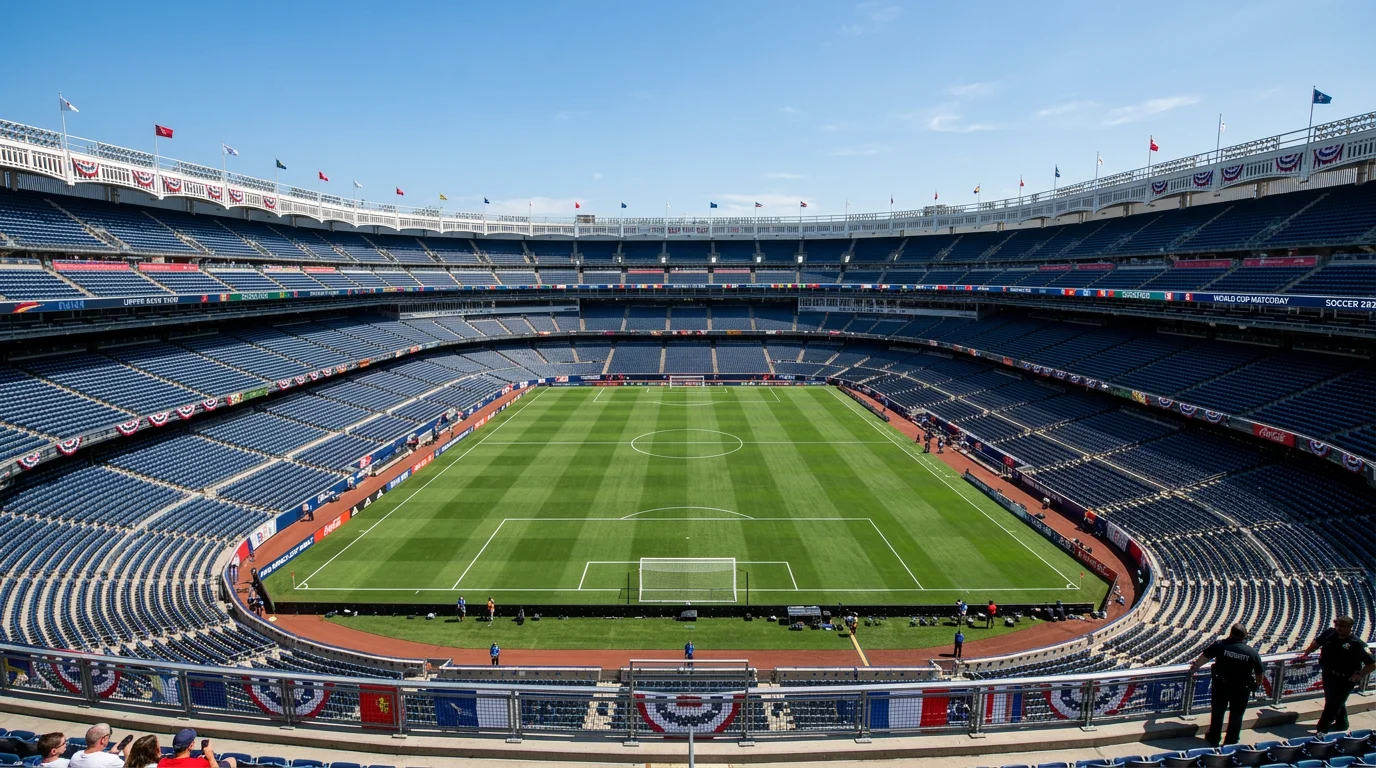
In 1994, the United States hosted the World Cup and averaged over 69,000 fans per match — the highest attendance in tournament history at that time. Thirty-two years later, the US are hosting again, and the stakes are immeasurably higher. The USMNT have evolved from the plucky host-nation novelty of ’94 into a squad stocked with players at the biggest clubs in European football, and the home advantage across 11 American stadiums will be unlike anything we have seen at a World Cup before. Group D — with Paraguay, Australia and Turkey — looks navigable, and the bookmakers have the US priced around 16/1 to win the tournament outright. That number feels about right at first glance, but dig deeper into the host-nation data across World Cup history and the picture becomes more interesting. Home advantage at a World Cup is not just about crowd noise. It is about travel, climate, preparation, familiarity and pressure — and the data from previous host nations tells a story that every Irish punter should understand before pricing the Stars and Stripes.
The Host-Nation Factor: Does It Translate to Results?
Let me start with the historical record, because it is the single most important variable in assessing the USA’s World Cup 2026 prospects. Across 22 previous World Cups, host nations have reached the semi-finals or better on 12 occasions — a strike rate of 55%. That is an extraordinary number, and it holds even when you exclude the early tournaments where the host nation was automatically seeded into a favourable bracket. In the modern era (post-1998), host nations have reached at least the quarter-finals in six of seven tournaments: France (winners, 1998), South Korea (semi-finals, 2002), Germany (semi-finals, 2006), South Africa (group stage, 2010), Brazil (semi-finals, 2014), Russia (quarter-finals, 2018), and Qatar (group stage, 2022).
The two exceptions — South Africa and Qatar — share a common characteristic: both had squads that ranked outside the world’s top 40 at the time of the tournament. Their home advantage was insufficient to overcome the quality gap. The United States in 2026 are a different proposition: their squad ranks comfortably inside the top 15 globally, with genuine quality in every position. When you combine a top-15 squad with host-nation advantage, the historical data suggests a semi-final appearance is the median outcome, not the optimistic scenario.
The specific nature of the US home advantage in 2026 is worth unpacking. The tournament spans 11 American stadiums across four time zones, from Seattle to Miami, Boston to Dallas. The USMNT train and play regularly in these venues, understand the surface conditions, the climate variations and the travel logistics. Their opponents will be navigating unfamiliar stadiums, unfamiliar heat profiles (a July match in Houston is a fundamentally different physical challenge to one in Seattle), and unfamiliar travel distances between venues. The US squad can base themselves centrally and minimise travel, while opponents from Group D may need to cross the country between fixtures. This logistical advantage is real and underpriced by the market, which tends to focus on squad quality rather than tournament infrastructure when setting odds. Look at the venues where they play in our all 16 World Cup 2026 stadiums guide.
USMNT Squad and Key Players
The days of Americans being exotic curiosities in European football are long gone. The current USMNT squad includes players at Champions League clubs, Premier League sides and top Bundesliga teams. The generation that emerged through the US Soccer development pipeline from 2018 onwards represents the most technically gifted group of American footballers in history, and by 2026, those players will be at or near the peak of their careers — aged 23 to 27 for the most part.
The attacking talent is the headline. The leading forward has been scoring prolifically in one of Europe’s top five leagues, and his combination of pace, directness and finishing makes him a genuine World Cup-level threat. The creative midfielder behind him has developed into one of the most effective playmakers outside of the traditional European powerhouses, with a passing range and vision that would not look out of place in a Spanish or German starting XI. The wide forward options include players who have excelled in the Bundesliga and Premier League, bringing dribbling ability and crossing quality that give the USMNT multiple routes to goal.
Defensively, the picture is more mixed. The centre-back pairing is experienced at the highest level and aerially dominant, but the pace across the back line has been a concern in recent international fixtures, particularly against opponents who play with rapid transitions and direct through balls. The full-back positions are well-covered, with multiple options who can play on either side, and the holding midfielder provides a reliable screen in front of the defence. The goalkeeper is one of the squad’s undisputed strengths — a shot-stopper of genuine international quality whose performances in qualifying have been consistently excellent.
The bench depth is where the US squad diverges from the very best. France can replace a starting attacker with a player of near-identical quality; the USMNT cannot. The drop-off from the first XI to the second-choice players is more pronounced than for the tournament favourites, and in a 48-team format that demands squad rotation, this depth gap could become significant in the later rounds. The manager will need to be judicious about when to rest key players and when to push them through fatigue, and getting that balance wrong could mean arriving at a quarter-final with a physically depleted starting XI.
Group D: Paraguay, Australia and Turkey
The Group D draw was kind to the hosts. Paraguay, Australia and Turkey represent a balanced mix of styles and challenges, but none of the three sides is ranked in the world’s top 20, and the US should progress as group winners if they perform to their level.
Turkey are the strongest opponent in the group and a side that can cause problems with their aggressive pressing and rapid transitions. Turkish football has undergone a resurgence in recent years, with a young squad that plays with intensity and fearlessness. Their Euro 2024 campaign — which included some impressive results against established European sides — demonstrated that Turkey are a genuine threat in knockout football, and their squad includes multiple players from the top five European leagues. The tactical profile of Turkey — a high-pressing 4-3-3 that transitions vertically at pace — is precisely the kind of system that can exploit the US defence’s lack of recovery speed. For the US, the Turkey fixture is the group-stage match that will test their defensive resilience and their ability to cope with pressure in a hostile atmosphere — although in this case, the home crowd will be in the American corner. I expect the match odds to reflect a tight contest, with the US around 4/5 and the draw at 12/5. Both teams to score looks a strong play at around 10/11.
Australia bring physicality, aerial threat and a never-say-die mentality that has become their trademark at World Cups. The Socceroos qualified through the Asian section and will arrive in North America with a squad that mixes A-League experience with a growing contingent of European-based players. Their 2022 World Cup campaign demonstrated that Australia can compete with anyone in a single match, and the knockout-round win over Denmark showed their capacity for big-game performances. For the US, Australia are the opponent where set-piece defending and second-ball control become decisive. The match should be a physical, contested affair, and the total goals market is likely to be set at 2.5 with the under favoured at around 10/11.
Paraguay are the least fancied side in Group D, though dismissing any South American team at a World Cup is a mistake. Their qualification through CONMEBOL was hard-earned, and the squad includes experienced players who understand tournament football. Paraguay will defend deep, look to frustrate and counter-attack, and hope to create the kind of chaotic, scrappy match that neutralises the US’s technical advantage. The odds will heavily favour the US, and the betting interest lies in the handicap and timing of first goal markets.
Outright Odds and Value Assessment
The US at 16/1 to win the World Cup is the price that has attracted the most attention from sharp bettors in the early market. The implied probability is roughly 6%, and my model — which weights the host-nation factor heavily based on the historical data I have outlined — assigns a probability closer to 8-9%. That represents genuine value, and the US outright is one of the bets I find most compelling in the tournament.
The case against the US at 16/1 rests on squad depth and the quality ceiling in the knockout rounds. Even with home advantage, the US would need to beat sides like France, Argentina or England in a quarter-final or semi-final, and the individual quality gap in those fixtures is real. The counter-argument is that home advantage compresses that gap: the crowd energy, the familiar conditions, the reduced travel fatigue — these factors are worth a goal’s worth of advantage in a knockout match, and a goal is often the difference between a quarter-final exit and a semi-final berth.
The each-way market is even more appealing. The US at 16/1 each-way with 1/4 odds for a top-four finish pays 4/1 on the place part. My model rates the US at roughly a 20-22% probability of reaching the semi-finals, which translates to fair odds of approximately 7/2 to 4/1. At 4/1 for the place part, you are getting a price that sits right at fair value, and the host-nation historical record supports it. This is a genuinely attractive bet.
In the group markets, the US to top Group D is priced around 4/6, implying a 60% probability. I rate it slightly higher at 63-65%, so the price is fair but not exceptional. Where I see clear value is in the US to qualify from the group at around 1/4 — the probability of the hosts failing to progress from this group is minimal, below 10%, and while the price is short, it serves as a reliable banker leg for accumulator builders.
Analyst’s Verdict
The US at World Cup 2026 are the tournament’s most intriguing betting proposition. The host-nation historical data is compelling, the squad is the strongest the country has ever produced, and the Group D draw provides a platform for a deep run. I am backing the US each-way at 16/1, with the semi-final place part at 4/1 representing the stronger half of the bet. The outright is a speculative selection that requires everything to fall right, but the each-way place part is a value bet grounded in historical patterns and squad quality.
For the group stage, I like the US to win Group D with at least seven points at around 6/4. The Turkey fixture may produce a draw, but wins against Paraguay and Australia should be within reach, and seven points from three matches is the profile of a side that progresses with momentum. The US to keep a clean sheet in the Paraguay match at around 5/4 also appeals — Paraguay’s attacking limitations and the US goalkeeper’s form make a shutout plausible. Follow the host nation on KickOff26.
For Irish punters watching from across the Atlantic, the US are the side most likely to exceed expectations and move through the World Cup 2026 odds in dramatic fashion as the tournament progresses. The combination of squad quality, home advantage and favourable draw makes them the value selection that sharp bettors should not overlook.
What are the USA"s odds to win World Cup 2026?
The USA are priced around 16/1 to win the World Cup 2026 outright. The each-way market is particularly interesting, with the place part paying 4/1 for a semi-final berth. The historical record of host nations reaching the semi-finals — in 55% of tournaments — supports the case for value at this price.
How strong is the host-nation advantage at World Cups?
Host nations have reached the semi-finals or better in 12 of 22 previous World Cups. In the modern era, every host nation ranked inside the world"s top 40 at the time of the tournament has reached at least the quarter-finals. The USA, ranked inside the top 15, fit the profile of a host nation expected to make a deep run.
