
World Cup 2026 Odds & Market Comparison
 Available in US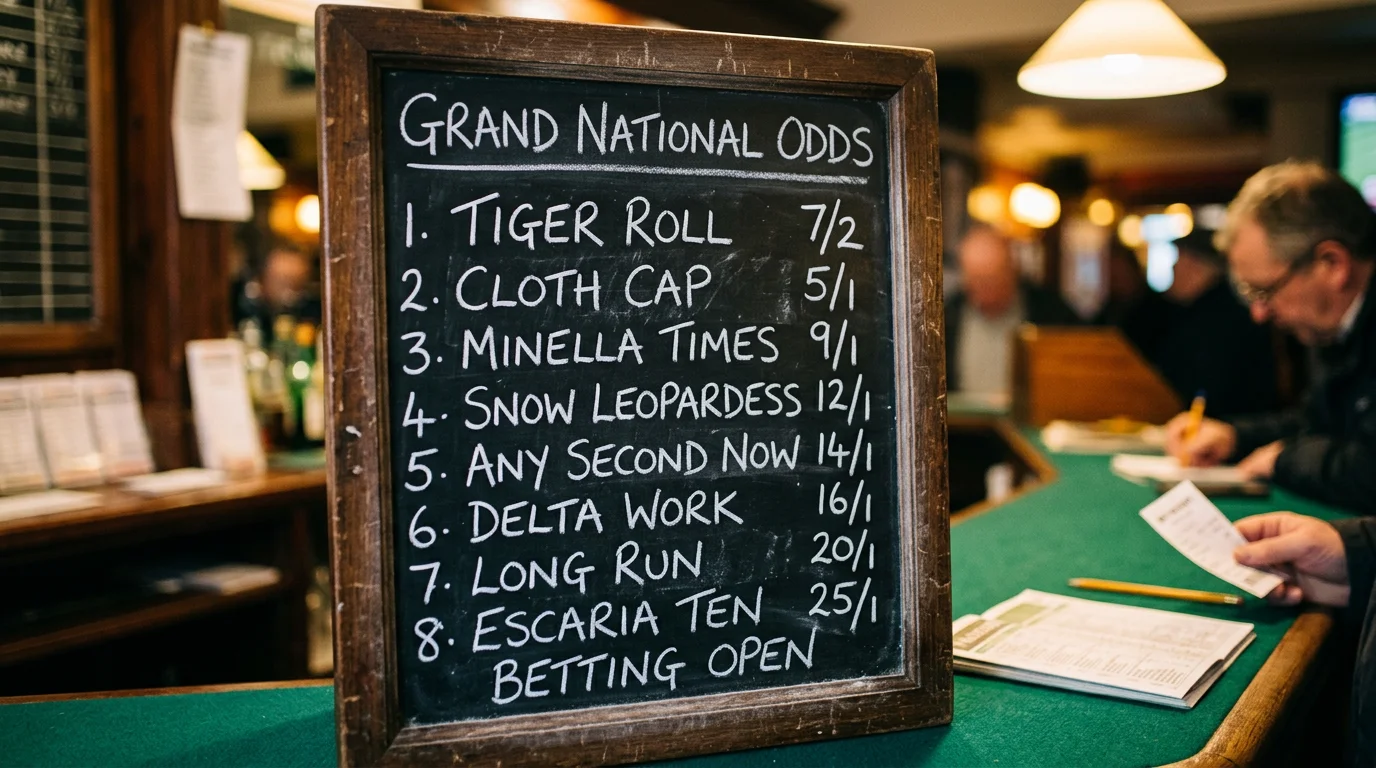
Argentina sit at 9/2 in most books. Brazil hover around 5/1. France and England jostle for the third-favourite position somewhere between 11/2 and 6/1. These numbers represent billions of euros in implied probability judgments by the sharpest oddsmakers in the world — and every single one of those judgments contains assumptions that may prove wrong. The World Cup 2026 odds market is the largest single-event betting market in football, and understanding how to read these prices is the first step toward finding value within them.
What makes this tournament’s odds particularly intriguing is the unprecedented format. No bookmaker has priced a 48-team World Cup before. The models that drive odds compilation have been trained on 32-team tournaments with 8 groups, not 12 groups with 32 teams qualifying for the knockout rounds. Every outright price currently on the board includes an element of educated guesswork about how the expanded format will affect tournament dynamics — and educated guesswork is where edges emerge.
This breakdown covers every major World Cup 2026 odds market: outright winner, each-way value, group winner betting across all 12 groups, Golden Boot odds, and the proposition markets that offer alternative angles on the tournament. I have been tracking these prices since the draw and will walk through where I see the market overreacting, underreacting, and potentially mispricing based on the unique characteristics of this World Cup.
Outright Winner Odds
Pricing the outright winner of a World Cup requires answering a deceptively simple question: what is the probability that this team will win seven consecutive knockout matches across six weeks? For the favourites, that probability must account for squad depth, tournament experience, managerial pedigree, draw path, and the fundamental unpredictability of knockout football. The current market has settled into a clear tier structure that I want to examine critically.
Argentina defend their title as narrow favourites at 9/2 with most Irish bookmakers. That price implies roughly an 18% probability of winning the tournament, which seems reasonable for a team that has won the last World Cup, the Copa America, and the Finalissima in the current cycle. The question is whether Lionel Messi at 38 or 39 can sustain the physical demands of seven matches in a North American summer — and whether the supporting cast can elevate their game sufficiently if he cannot. Julián Álvarez and Enzo Fernández represent genuine quality, but Argentina’s defence looked vulnerable in recent qualifying matches against Ecuador and Paraguay.
Brazil at 5/1 represent the second layer of favourites, and this price fascinates me. The Seleção have not won a World Cup since 2002, failed to progress beyond the quarter-finals in their last three tournaments, and have cycled through managers without finding stability. Yet the raw talent remains extraordinary — Vinícius Jr, Rodrygo, Endrick, and a midfield that could compete with any in the tournament. At 5/1, the market is essentially pricing Brazil as co-favourites with a slight discount for recent tournament underperformance. That seems about right, though the price has shortened considerably since the draw placed them in a relatively navigable Group C.
France at 11/2 have perhaps the most complete squad in the tournament, but Les Bleus carry the defending champions curse into 2026. No team has won back-to-back World Cups since Brazil in 1958-1962, and the pattern of finalists struggling in the subsequent tournament holds strong in recent history. Kylian Mbappé is now fully established as the team’s talisman, but the depth behind him has shifted — new faces will need to step up in ways they have not been tested before. At this price, France offer fair value but not obvious edge.
England at 6/1 represent what I consider the most interesting debate in the outright market. English supporters will point to the deepest squad of any European nation, a golden generation now at peak years, and a manager in Thomas Tuchel who knows how to win knockout tournaments. Sceptics will note that England have not won a major tournament since 1966, that previous golden generations have flattered to deceive, and that Group L including Croatia presents an immediate test of character. The price implies roughly 14% probability — my view is that this is about right if Tuchel can actually integrate the talent, and too short if England’s familiar tournament demons resurface.
Germany at 8/1 are perhaps the best value among the major nations based on squad quality alone. The post-home-Euros rebuilding project has produced a team with better balance than the side that crashed out of the 2022 group stage. Jamal Musiala, Florian Wirtz, and Kai Havertz bring creativity that Germany lacked for years, while the defensive structure has improved markedly. At 8/1 — implying around 11% probability — Germany are priced below their likely true chances of winning the tournament.
Spain at 9/1 won the Nations League and possess generational midfield talent in Pedri, Gavi, and the increasingly dominant Rodri. The concern is at striker, where Spain have cycled through options without finding a reliable twenty-goal-a-season forward. International tournaments often hinge on clinical finishing, and Spain’s inability to convert dominance into goals has been a recurring theme. At 9/1, I view Spain as fair value — not obviously mispriced in either direction.
Portugal at 14/1 and the Netherlands at 16/1 represent the next tier of European contenders. Portugal’s price feels compressed by Cristiano Ronaldo’s ongoing presence — though his role and minutes remain genuinely uncertain for a 41-year-old who may be third choice in terms of pure effectiveness. The Dutch have a classic tournament profile: strong enough to beat anyone but inconsistent enough to lose to lesser opposition when concentration lapses. Both prices seem reasonable reflections of these teams’ actual chances.
Beyond the top ten, the outright market becomes increasingly speculative. Teams priced at 20/1 or longer face the mathematical challenge that even a strong tournament run may not return substantial profit relative to stake risk. This is where each-way betting and alternative markets become more attractive than straight outright backing.
Each-Way Betting: Finding Value Beyond the Top Four
My most profitable World Cup bet ever was Croatia each-way at 40/1 before the 2018 tournament in Russia. The outright price was obviously too long for a team with that midfield quality, but the real value was in the place terms — 1/4 odds for finishing in the top four. When Croatia reached the final, that each-way bet returned 10/1 on the place part even without winning the tournament. Each-way betting transforms the risk-reward equation for tournament football, and the 2026 World Cup offers several compelling each-way propositions.
The standard terms from most Irish bookmakers on World Cup outright betting are 1/4 odds for the first four places — meaning your selection needs to reach the semi-finals for the place part to pay out. For a team priced at 25/1, the each-way bet returns 25/4 (6.25/1) if they reach the semis. This fundamentally changes which teams offer value: a nation with a realistic path to the semi-finals but little chance of winning it all may be worth backing each-way even when the outright price appears reasonable.
Croatia at 33/1 exemplify this principle. Their golden generation is entering its final tournament, with Luka Modrić now 40 years old and playing his last World Cup. Modrić, Kovačić, and Brozović give Croatia a midfield that can compete with any team in the tournament, and their tournament pedigree — finalists in 2018, third place in 2022 — demonstrates they know how to navigate knockout football. The outright price of 33/1 implies roughly 3% win probability, which may be too long. But the each-way value is clearer: reaching the semi-finals again is perhaps a 15-20% proposition, making the place part odds of 33/4 (approximately 8.25/1) genuinely attractive.
Colombia at 28/1 present an interesting each-way case from CONMEBOL. They qualified strongly, possess the midfield quality of James Rodríguez in his final tournament push, and are drawn in Group K alongside Portugal, DR Congo, and Uzbekistan. That group is navigable, and the knockout draw could set up favourable round-of-32 and round-of-16 matchups. At 28/1 with standard each-way terms, a semi-final run would return 7/1 on the place part — sufficient reward for backing a dark horse with genuine talent.
Denmark at 40/1 have been semi-finalists at recent European Championships and possess the kind of organised, physical style that travels well to World Cups. Christian Eriksen remains influential, and the defensive structure is among the most disciplined outside the top tier of nations. At 40/1, the each-way proposition offers 10/1 place odds — meaning a semi-final appearance would return profitable multiples even if Denmark have no realistic shot at winning the final.
The each-way calculation always involves assessing the gap between your probability of reaching the semi-finals and the implied probability of the place odds. If you believe Croatia has a 20% chance of reaching the last four, the 33/4 place odds imply only about 11% probability — genuine value exists. Run this calculation for every selection before placing each-way bets, and be honest with yourself about whether your probability assessments are based on evidence or hope.
Group Winner Odds: All 12 Groups
The expanded format creates 12 separate competitions within the World Cup before the knockout rounds begin. Each group has its own winner odds, and these markets often offer value that the outright market does not because bookmakers allocate less analytical resource to them. I have broken down every group with the current frontrunner pricing and where I see the market potentially wrong.
Group A features host nation Mexico as 4/6 favourites ahead of South Korea at 11/4, Czechia at 7/2, and South Africa at 14/1. Mexico’s home advantage in the opening match and likely home-soil fixtures throughout the group stage justify favouritism, but the price is too short. El Tri have not advanced beyond the round of 16 since 1986, and while the group is winnable, Son Heung-min’s South Korea have the quality to make this competitive. South Korea at 11/4 offer each-way value for group betting if available.
Group B sees Switzerland at 6/4 narrowly favoured over Canada at 7/4, with Bosnia and Herzegovina at 3/1 and Qatar at 8/1. This is the most open group in the tournament based on market pricing, and I agree with that assessment. Switzerland’s consistency in reaching knockout rounds justifies slight favouritism, but Canada’s home-nation advantage in Vancouver and Toronto matches could prove decisive. The value here may be in backing the group to have multiple teams progress rather than a specific winner.
Group C pits Brazil at 2/5 against Morocco at 7/2, Scotland at 8/1, and Haiti at 50/1. Brazil’s price is too short at 2/5 — Morocco reached the semi-finals in 2022 and will be determined to prove that was no fluke. The Atlas Lions at 7/2 represent genuine value given their defensive quality and the counterattacking threat they pose. Scotland at 8/1 face a brutal group but have the spirit and tactical organisation to cause problems. Haiti will struggle at this level.
Group D has the United States at 4/5 ahead of Turkey at 5/2, Australia at 4/1, and Paraguay at 11/2. The home advantage makes the USA difficult to oppose at this price, though I would prefer slightly longer odds. Turkey’s golden generation under Vincenzo Montella have shown quality in qualifications, and 5/2 may underestimate their ceiling. Australia at 4/1 could sneak through to the round of 32 but winning the group seems beyond them.
Group E sees Germany at 4/9 against Ecuador at 7/2, Côte d’Ivoire at 5/1, and Curaçao at 66/1. This is one of the most lopsided groups and the pricing reflects it. Germany should cruise to first place, making the 4/9 odds poor value despite likely success. Ecuador at 7/2 for second place (if available) or group exacta betting may offer better angles.
Group F features the Netherlands at 4/6 with Japan at 11/4, Sweden at 4/1, and Tunisia at 7/1. This group could produce surprises. Japan beat Germany and Spain in the group stage at Qatar 2022 and have improved since. At 11/4, the Samurai Blue represent excellent value given their recent tournament performances. The Netherlands often start tournaments slowly before improving — backing Japan to top the group is a contrarian position worth considering.
Group G places Belgium at 8/11 ahead of Egypt at 4/1, Iran at 5/1, and New Zealand at 14/1. Belgium’s golden generation has one final shot at a major trophy, but age is now a factor — Kevin De Bruyne and Romelu Lukaku are no longer at peak. Egypt with Mohamed Salah offer genuine value at 4/1, particularly if Belgium’s ageing legs cannot cope with the North American summer heat.
Group H sees Spain at 2/5 against Uruguay at 9/4, Saudi Arabia at 12/1, and Cabo Verde at 66/1. Spain’s price is too short for a team that has struggled to finish tournaments in recent cycles. Uruguay at 9/4 represent strong value — the La Celeste have a new generation emerging alongside experienced tournament performers, and beating Spain is well within their capabilities.
Group I has France at 2/9 with Norway at 9/2, Senegal at 5/1, and Iraq at 50/1. France’s overwhelming favouritism leaves little room for value on them, but Senegal at 5/1 intrigue me. The African champions have lost Sadio Mané from his peak years but retain defensive solidity and physical presence. Norway with Erling Haaland at 9/2 offer upside if Haaland translates his club form to international level.
Group J places Argentina at 2/9 ahead of Austria at 6/1, Algeria at 7/1, and Jordan at 25/1. Argentina’s price is appropriate for defending champions, though Austria’s value at 6/1 deserves attention. Das Team have improved significantly under Ralf Rangnick and could challenge for second place while potentially pushing Argentina. Algeria at 7/1 with their organised defensive structure may also provide resistance.
Group K features Portugal at 4/7 against Colombia at 11/4, DR Congo at 9/1, and Uzbekistan at 20/1. Colombia at 11/4 are excellent value here. They qualified strongly from CONMEBOL, possess tournament experience, and Portugal’s reliance on an ageing core leaves vulnerabilities. I rate Colombia’s chances of topping this group at closer to 35% — significantly higher than the 11/4 price implies.
Group L sees England at 4/6 with Croatia at 2/1, Ghana at 8/1, and Panama at 16/1. This is the group I expect to produce the most drama. England’s price does not adequately account for Croatia’s proven tournament pedigree. At 2/1, Croatia offer each-way value on the group market if such terms are available, and should be considered as potential group winners outright. Ghana at 8/1 could cause problems for both European sides.
Top Scorer Odds
The Golden Boot market is among the most popular World Cup betting propositions, and also among the most difficult to beat. Historical data tells us that tournament top scorers typically come from teams reaching at least the quarter-finals, often play in attacking systems that create multiple chances per match, and frequently benefit from penalty duties. The 2026 market currently favours two names above all others: Kylian Mbappé at 7/1 and Harry Kane at 8/1.
Mbappé’s price reflects his status as the most complete forward in world football and France’s likely deep tournament run. He takes penalties, plays in a system designed to maximise his goal output, and has previous World Cup pedigree — he scored four times in the 2022 final alone. The concern is that this price leaves no margin for variance. If France exit in the quarter-finals, or if Mbappé faces injury or suspension, the value evaporates instantly.
Kane at 8/1 benefits from England’s expected deep run and his reliability from the penalty spot. England’s group and potential bracket path could see Kane accumulate goals against weaker opposition before the quarter-finals, building a lead that others cannot match. The knock against Kane is that England’s deep squad means goals may be distributed more evenly than in previous tournaments where Kane was effectively the sole striking option.
Vinícius Jr at 10/1 represents interesting value if you believe Brazil will reach the semi-finals or beyond. He has developed into a complete forward since the 2022 World Cup and now takes penalty duties for club and country. Brazil’s attacking system creates chance volume, and Vinícius has the finishing quality to convert. At 10/1, he offers better value than either Mbappé or Kane relative to underlying probability.
The dark horse play in the Golden Boot market is backing a forward from a team drawn in a weak group who may score heavily in the group stage. Erling Haaland at 16/1 fits this profile — Norway face Iraq in Group I, and Haaland could conceivably score four or five goals in the group stage alone before tougher knockout opposition slows his accumulation. The risk is Norway not advancing far enough for Haaland to catch prolific scorers from deeper-advancing teams.
Each-way terms on Golden Boot are typically 1/4 odds for the top three scorers. This significantly changes the value equation for players at longer prices. A forward priced at 33/1 who finishes in the top three returns 33/4 (approximately 8.25/1) on the place portion. For players with clear pathways to multiple goals but little chance of actually topping the charts, each-way represents far better value than outright backing.
Use these odds to inform your outright winner analysis.
Tournament Specials and Proposition Markets
Beyond the headline markets, World Cup betting offers dozens of proposition bets that allow punters to express views on specific tournament outcomes. These specials markets often carry less bookmaker scrutiny than outrights and can offer genuine edges for those with specific knowledge or analytical angles.
Highest-finishing team by confederation creates opportunities to compare relative strength across regional groupings. UEFA typically dominates with the deepest pool of quality nations, but CONMEBOL teams have won recent World Cups and the 2026 draw favours several South American sides. Backing CONMEBOL as highest-finishing confederation at odds against offers value if you believe Argentina or Brazil will reach the final.
Team to reach quarter-finals and team to reach semi-finals markets isolate tournament progress from outright winning. For teams with clear bracket paths but questionable credentials to win the whole tournament, these markets can offer better value than outrights. Morocco to reach the quarter-finals, for instance, may be priced more attractively than Morocco to win the tournament relative to the actual probability of each outcome.
Group exacta betting — predicting the first and second placed teams in the correct order — offers enhanced odds for confident group assessments. In Group C, Brazil-Morocco at perhaps 9/4 implies approximately 31% probability. If your analysis suggests Brazil top and Morocco second at closer to 40% probability, genuine value exists. These markets require strong views on the specific finishing order within groups but pay substantially better than straight group winner betting.
Winning continent and winning region markets allow broader confederation-level plays. Europe has won the last four World Cups held outside their continent, suggesting UEFA teams adapt well to away conditions. Whether this pattern continues in North America — with time zones favouring European body clocks relative to South American — remains an open question. At current odds, neither UEFA nor CONMEBOL offers clear value on the winning confederation market.
Manager specials including “first manager to leave” and “manager of the tournament” create betting angles based on employment volatility. Tournament football historically produces rapid managerial turnover after group-stage exits, and identifying which underperforming side will dismiss their manager first can generate returns. These markets reward close attention to pre-tournament pressure and board sentiment that casual punters overlook.
Tracking Odds Movement: What the Markets Tell Us
Odds are not static numbers — they represent a continuous negotiation between bookmaker opinion and betting volume. Understanding how and why odds move helps identify when sharp money is entering the market and where public perception may be creating distortions. For World Cup 2026, tracking odds movement since the draw reveals several interesting patterns.
Argentina drifted from 7/2 immediately post-2022 to 9/2 currently, suggesting the market is gradually pricing in concerns about Messi’s age and the squad’s relative depth compared to European rivals. This drift represents sensible adjustment rather than overreaction — Argentina remain favourites but at more realistic odds than their immediate post-victory high.
England have shortened from 8/1 to 6/1 since Thomas Tuchel’s appointment, reflecting market confidence in the German’s ability to organise tournament preparation and make knockout-stage decisions under pressure. Whether this price correction is complete or continuing remains unclear — a strong warm-up campaign could see England shorten further toward 5/1.
Germany have steadily shortened from 14/1 to 8/1 over the past eighteen months as the post-2022 rebuild has shown tangible progress. This movement suggests sharp money identified value at 14/1 and has gradually compressed the odds through consistent backing. The current 8/1 price may now fairly reflect Germany’s chances, meaning the value window has closed.
The most dramatic movement has been Morocco drifting from 40/1 post-2022 to 28/1 currently despite their semi-final run in Qatar. This suggests the market views their 2022 performance as somewhat anomalous rather than establishing a new baseline. I disagree with this assessment — Morocco’s defensive organisation and counterattacking threat are repeatable features, not one-tournament flukes. The current price may represent residual value.
Watching where professional bettors place their money — typically observable through sharp line movements at betting exchanges — provides insight into where analytical consensus differs from public perception. When a price shortens rapidly without obvious news catalyst, that usually indicates informed money has entered the market.

Identifying Value: Methodology and Approach
Every odds discussion ultimately leads to the same question: how do I find value? The theoretical answer is simple — back selections where your assessed probability exceeds the implied probability of the odds offered. The practical answer requires a methodology for probability assessment that is both rigorous and honest about its limitations.
I build my tournament probability models starting with Elo ratings or similar strength metrics, then adjusting for tournament-specific factors: draw path, home advantage, manager experience, squad age profile, and recent tournament form. This produces a baseline probability for each team reaching each round. The outright probability is then the product of conditional probabilities across all rounds — the chance of reaching the final multiplied by the chance of winning a final given you reached it.
The key adjustment for World Cup 2026 is accounting for the unprecedented format. My models suggest that the additional round-of-32 matches slightly favour higher-quality teams because they add another knockout round where class can tell, but the expanded group stage and third-place qualification pathway increase variance. The net effect is modest compression of outright probabilities toward the mean — less certainty that top favourites will win, slightly higher probabilities for dark horses.
Comparing model outputs to market odds reveals where potential value lies. If my model gives Germany a 15% probability of winning and the market price of 8/1 implies 11.1%, that suggests approximately 4 percentage points of value. Whether to bet depends on confidence in the model and the margin required to overcome bookmaker edge — I typically require at least 3 percentage points of perceived value before committing meaningful stakes.
Honest model building requires acknowledging uncertainty. My probability for any given team winning is itself uncertain — I might say Germany has a 15% chance, but the true probability could reasonably be anywhere from 10% to 20%. When my point estimate shows value but the confidence interval overlaps with the market-implied probability, the case for betting weakens. Only when I am confident that my range sits clearly above the market price do I consider the bet strong.
Selections: Where I See Value in the Current Market
Based on the analysis above, here are the specific selections where I believe the current World Cup 2026 odds market has mispriced relative to underlying probability. These are not predictions — they are assessments of where the risk-reward is favourable based on current pricing.
Germany at 8/1 outright represent my strongest conviction. The rebuild under Julian Nagelsmann has produced a balanced squad with tournament-winning quality, and the price still reflects lingering doubts from the 2022 group-stage exit. Germany have won four World Cups, three of them since 1990, and possess the experience and quality to add a fifth. At 8/1, the implied probability of roughly 11% is too low.
Croatia at 33/1 each-way offers compelling value for semi-final place terms. Their tournament record speaks for itself — finalists in 2018, third place in 2022, now priced as if that experience counts for nothing. The midfield quality remains world-class, the draw path from Group L is navigable, and 33/1 with 1/4 odds for top four represents mispricing that I expect to correct as the tournament approaches.
Colombia at 11/4 to win Group K should be backed at current prices. Portugal are not as strong as their reputation suggests, the group lacks a clear third force to disrupt seeding, and Colombia qualified impressively from CONMEBOL. At 11/4, the implied probability is around 27% — I assess their actual probability of topping Group K closer to 35%.
Japan at 11/4 to win Group F represents a contrarian position with solid underlying logic. They beat Germany and Spain in group stages at Qatar 2022, have improved their squad since, and face a Netherlands team that historically starts tournaments slowly. The 11/4 price implies roughly 27% probability; I believe Japan’s true chances of topping the group exceed 30%.
Uruguay at 9/4 in Group H offers value against a Spain team priced as if their tournament struggles never happened. La Roja have failed to advance beyond the semi-finals at the last four World Cups despite entering each as contenders. Uruguay have tournament pedigree, emerging talent, and the defensive organisation to frustrate Spain’s possession approach. At 9/4, Uruguay are worth backing. Compare the latest lines on KickOff26.
For the Golden Boot, Vinícius Jr at 10/1 each-way represents the best risk-adjusted option. Brazil should advance deep into the tournament, Vinícius now has penalty duties, and his finishing has improved dramatically since the 2022 World Cup. The 10/1 price with top-three place terms offers sufficient return for the uncertainty inherent in scorer markets.
When is the best time to place World Cup 2026 outright bets?
Prices are currently at their most volatile and potentially mispriced because the tournament format is unprecedented. Value may exist now that disappears as bookmakers refine their models. However, injury risk means backing players or player-dependent teams carries risk until squad announcements confirm fitness. The optimal approach is placing outright team bets now while reserving player-specific markets until closer to kick-off.
Should I bet on multiple outright selections for World Cup 2026?
Backing multiple outright selections can make sense if you identify value across several teams. The key is ensuring combined stakes represent acceptable risk. If you back three teams at 8/1, 20/1, and 33/1 with equal stakes, you need one of them to win to profit. The implied probability of at least one winning is higher than any individual selection, but so is your total risk exposure. Size stakes according to confidence rather than equal allocation.
How do World Cup odds compare between Irish bookmakers?
Variation exists and shopping for the best price adds meaningful value over a tournament. On outright favourites, differences of a point or two are common. On longer-priced selections and proposition markets, variation can exceed 20% of implied probability between best and worst prices. Having accounts with multiple operators allows you to always take the best available odds rather than accepting whatever your primary bookmaker offers.
Are World Cup 2026 group winner markets good value?
Group markets often carry better value than outrights because they receive less analytical attention from bookmakers. The twelve-group format creates more individual markets to price, increasing the chance of error. Groups with clear favourites may not offer value on backing those favourites, but groups with competitive balance — like Group B with Switzerland, Canada, Bosnia, and Qatar — often present mispriced selections. Each-way terms on group winners, where available, can transform marginal value into strong propositions.
