
World Cup 2026 Teams: All 48 Nations
 Available in US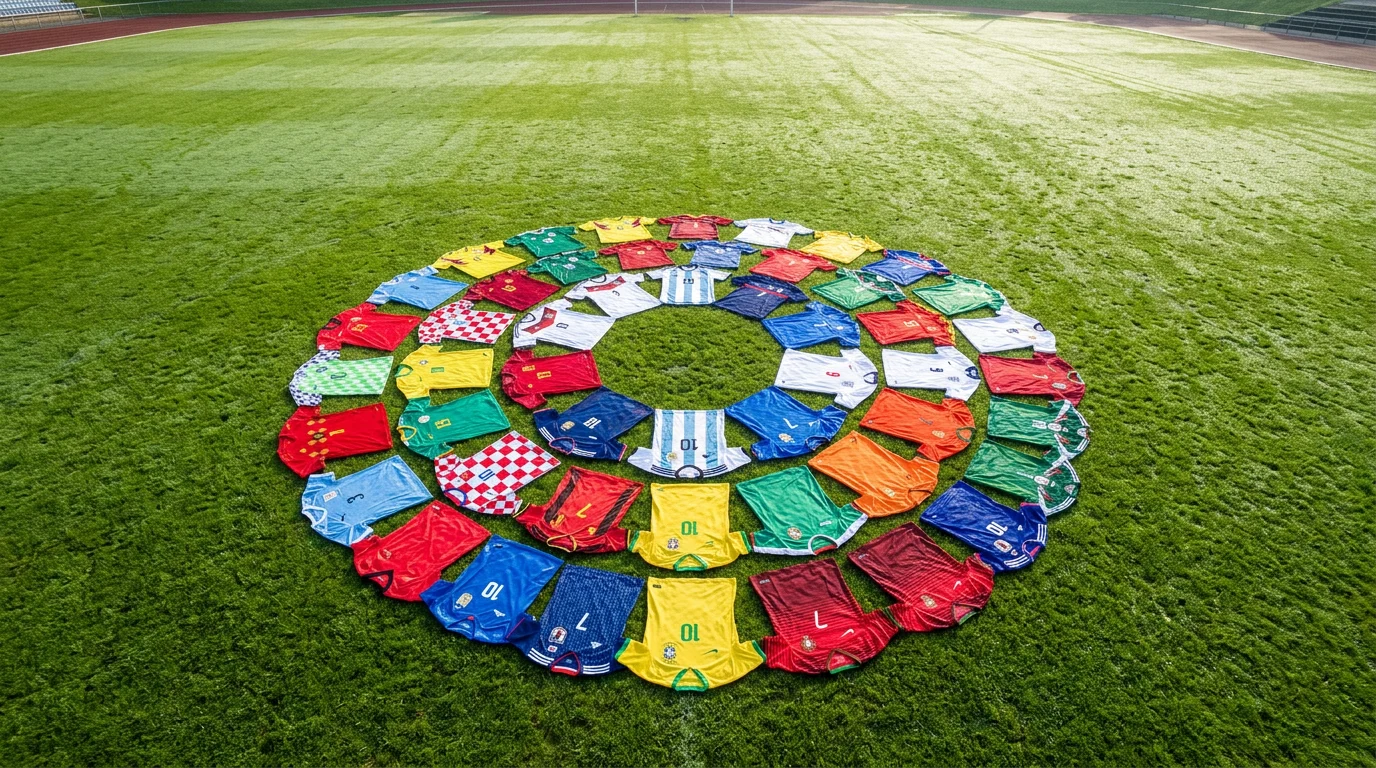
Forty-eight nations will contest the FIFA World Cup 2026. That is 16 more than any previous tournament, representing the most significant format expansion in the competition’s 96-year history. Six confederations have sent their best: UEFA leads with 16 European nations, CONMEBOL contributes 6 South American teams, CAF sends 9 African representatives, AFC provides 8 Asian sides, CONCACAF places 6 teams from North and Central America and the Caribbean, and OFC has secured one Oceanian spot for the first time since 2010. This guide profiles every qualified nation — from defending champions Argentina to tournament debutants — organised by the role each is likely to play when the action begins on 11 June 2026.
The expansion has not simply added weaker teams to the draw. Several nations that would have been genuine contenders in smaller fields now compete for spots in what some have called the “group of death” that the expanded format was supposed to eliminate. Others arrive at their first World Cup having outperformed established nations in qualification. The landscape of international football has shifted, and understanding these 48 teams means understanding a more complex competitive hierarchy than any previous tournament presented.
The Favourites: Title Contenders at Single-Figure Odds
A Brazilian journalist asked me before the 2022 draw whether I thought the favourites would change once the groups were revealed. I said no — the top tier remains the top tier because their quality transcends any draw. That holds true for 2026. The six nations priced at 10/1 or shorter possess the squad depth, tournament pedigree, and tactical sophistication to win seven consecutive matches against anyone the bracket throws at them.
Argentina enter as defending champions with the burden of expectation that title brings. Lionel Messi will be 38 when the tournament begins, facing questions about his role and minutes that would have been unthinkable four years ago. The supporting cast has evolved — Julián Álvarez has established himself as a Champions League winner at Manchester City, Enzo Fernández anchors the midfield, and Lisandro Martínez provides defensive steel. Argentina qualified comfortably from CONMEBOL despite occasional vulnerabilities against pressing sides. Their Group J draw with Algeria, Austria, and Jordan presents obstacles rather than terrors. At 9/2, Argentina are appropriately priced as tournament favourites, though the price has drifted from the immediate post-2022 high as the market prices in Messi’s advancing years and the defending champion’s historical struggles to retain the trophy.
Brazil’s five World Cup victories remain the record that defines football supremacy, but two decades without adding a sixth has created mounting pressure. The Seleção possess extraordinary individual talent in Vinícius Jr, Rodrygo, Endrick, and a midfield featuring Bruno Guimarães and Lucas Paquetá. The question is whether this generation can produce the collective cohesion that has eluded recent Brazilian sides. Manager turnover since Qatar 2022 has not helped — the tactical identity remains somewhat unclear compared to the Seleção sides of 1970, 1994, or 2002. Group C with Morocco, Scotland, and Haiti is navigable, and Brazil’s 5/1 price suggests the market expects progress at minimum to the quarter-finals.
France have assembled arguably the deepest squad of any nation, with Kylian Mbappé now fully established as the team’s talisman and Antoine Griezmann providing creative intelligence. Les Bleus reached the 2022 final despite significant injury disruption, which speaks to their depth. The defence has regenerated around younger players, while the midfield options allow tactical flexibility across formations. Group I against Senegal, Iraq, and Norway should be straightforward, though complacency remains France’s historical vulnerability. At 11/2, France are fairly priced for a team that could win but also exit in the quarters without it being considered a major shock.
England under Thomas Tuchel bring German tactical discipline to a squad dripping with attacking talent. Jude Bellingham, Phil Foden, Bukayo Saka, and Cole Palmer represent a generational concentration of creativity that previous England managers could only dream of. Harry Kane remains the focal point and penalty specialist, while the defensive options have improved with the emergence of several promising centre-backs. Group L with Croatia, Ghana, and Panama presents an immediate test — Croatia in particular will not fear England and may fancy their chances in that fixture. The 6/1 price reflects both England’s obvious quality and their historical tendency to disappoint in tournament knockout rounds.
Germany’s rebuilding project has produced tangible results. Jamal Musiala and Florian Wirtz provide the creative spark that was missing in Qatar, while Kai Havertz has developed into a more complete forward. The defensive structure has improved, and Julian Nagelsmann’s tactical flexibility allows adaptation to different opponents. Group E with Ecuador, Côte d’Ivoire, and Curaçao should be comfortable, leaving Germany well-positioned for the knockout rounds. At 8/1, Germany may be the best value among the top tier — the price still reflects the trauma of the 2022 group-stage exit more than the current squad’s quality.
Spain’s generational midfield talent in Pedri, Gavi, and Rodri gives them control of matches that few opponents can disrupt. The question remains whether Spain can convert that dominance into goals — tournament football punishes wastefulness in a way that qualifiers do not. Group H against Uruguay, Saudi Arabia, and Cabo Verde should provide goals against weaker opposition, but the knockout rounds will require clinical finishing that Spain have lacked in recent tournaments. At 9/1, Spain are fairly priced as a team capable of reaching the final but not quite equipped with the ruthlessness to guarantee winning it.
The Contenders: Quarter-Final Calibre and Beyond
The next tier of nations are not tourists at a World Cup — they expect to reach the knockout rounds and harbour genuine ambitions of progressing to the quarter-finals or further. These sides combine quality in key positions with tactical organisation that can frustrate superior opponents on any given day. They are priced between 14/1 and 33/1, representing teams with perhaps a 3-7% probability of lifting the trophy but significantly higher probabilities of deep tournament runs.
Portugal retain significant quality despite an ageing core. The question of Cristiano Ronaldo’s role looms large — at 41, his minutes and effectiveness cannot be what they once were, yet dropping the greatest goalscorer in international football history creates different challenges. Bruno Fernandes and Rafael Leão provide creative thrust, while Rúben Dias anchors the defence. Group K with Colombia, DR Congo, and Uzbekistan is navigable, though Colombia represent a serious test. At 14/1, Portugal are appropriately priced for a team that could reach the semi-finals but seems unlikely to win the tournament.
The Netherlands possess the historical pedigree — three World Cup finals, countless semi-final appearances — and a squad that blends experience with emerging talent. Virgil van Dijk leads the defence, while Cody Gakpo has developed into a tournament-calibre forward. Group F against Japan, Sweden, and Tunisia looks competitive, with Japan in particular capable of causing problems. At 16/1, the Netherlands represent fair value for a team that could beat anyone on their day but lack the consistency to be considered genuine favourites.
Belgium’s golden generation has one final shot at a major trophy. Kevin De Bruyne, Romelu Lukaku, and Thibaut Courtois remain world-class in their positions, but the supporting cast has aged without adequate replacement. The midfield beyond De Bruyne lacks the creativity that defined Belgium’s rise to world number one in the FIFA rankings. Group G against Iran, New Zealand, and Egypt should be manageable, though the knockout rounds will test whether Belgium’s experience can overcome their declining athleticism. At 20/1, Belgium are fairly priced as a team living on borrowed time.
Croatia enter their fourth consecutive World Cup having reached the final in 2018 and finished third in 2022. Luka Modrić at 40 will captain the side one final time, supported by Mateo Kovačić and Marcelo Brozović in a midfield that can match anyone in the tournament. The defence has regenerated, and Joško Gvardiol represents one of the best centre-backs at the tournament. Group L against England, Ghana, and Panama is challenging but not insurmountable. At 33/1, Croatia offer genuine each-way value given their tournament pedigree.
Morocco reached the semi-finals in Qatar 2022, becoming the first African nation to progress that far. That run was built on extraordinary defensive discipline, counterattacking speed, and the passionate support of the diaspora across European venues. The core of that team remains intact, though sustaining that level of organisation tournament after tournament is the challenge. Group C with Brazil, Scotland, and Haiti requires Morocco to navigate the favourites to progress. At 28/1, Morocco represent interesting value as a proven tournament team priced as if 2022 were a one-off anomaly.
Denmark have established themselves as consistent tournament performers, reaching the semi-finals of Euro 2020 and the round of 16 at the 2022 World Cup. Christian Eriksen remains the creative hub, while the defensive structure is among the most disciplined outside the absolute elite. Group placement will determine their knockout path, but Denmark have the quality to beat anyone ranked below the top tier. At 40/1, Denmark offer each-way value for semi-final place terms.
The Darkhorses: Value Picks and Emerging Forces
Every World Cup produces at least one team that exceeds expectations dramatically — South Korea and Turkey in 2002, Croatia in 2018, Morocco in 2022. The 48-team format with its 32-team knockout round increases the probability that an underrated side can string together results that propel them deep into the tournament. The darkhorses identified here are teams priced at 40/1 or longer that possess the quality to surprise if circumstances align.
Colombia qualified impressively from CONMEBOL, finishing above traditional powers in the standings. The midfield features James Rodríguez entering what may be his final major tournament, supported by younger talents who have developed at top European clubs. Group K with Portugal, DR Congo, and Uzbekistan offers a realistic path to the knockout rounds, and from there the bracket could open favourably. At 28/1, Colombia are perhaps the best-value South American team outside Brazil and Argentina.
Japan have developed a pattern of exceeding World Cup expectations, beating Germany and Spain in group stages at Qatar 2022 before narrowly losing to Croatia in the round of 16. The squad combines European club experience with tactical sophistication rare among Asian nations. Group F against the Netherlands, Sweden, and Tunisia is competitive but winnable. At 50/1, Japan represent genuine value for a team capable of reaching the quarter-finals.
Senegal are the reigning African champions and bring physical presence, defensive organisation, and the experience of multiple tournament appearances. The loss of Sadio Mané from his peak years has not been fully replaced, but the collective quality remains significant. Group I against France, Norway, and Iraq requires navigating the favourites, but second place is achievable. At 80/1, Senegal offer long-shot value for each-way tournament betting.
Turkey under Vincenzo Montella have shown significant improvement, with a squad featuring young talent from top European leagues. The attacking options include Arda Güler and Kenan Yıldız, both emerging as stars at Real Madrid and Juventus respectively. Group D against USA, Australia, and Paraguay is competitive, and Turkey’s ceiling if they progress from the group could be surprisingly high. At 66/1, Turkey represent speculative value with genuine upside.
Switzerland have reached the knockout rounds of the last three major tournaments, including a quarter-final at Euro 2020. Their consistency as a difficult opponent is unmatched among second-tier nations, even if their ceiling is limited. Group B against Canada, Bosnia and Herzegovina, and Qatar should be navigable. At 50/1, Switzerland offer steady value for those seeking lower-variance dark horse selections.

The Debutants and Returning Nations
The expanded format has created opportunities for nations that would not have qualified under the 32-team structure. Several teams are making their World Cup debuts, while others return after long absences that span decades. These nations may not win the tournament, but their presence adds narrative richness and introduces new footballing cultures to the global stage.
Curaçao make their World Cup debut as one of the smallest nations ever to qualify. With a population of approximately 150,000, the Dutch Caribbean island has produced several players who have competed in European leagues, and their qualification through CONCACAF represents a genuine against-the-odds achievement. Group E against Germany, Ecuador, and Côte d’Ivoire will be challenging, but simply competing at a World Cup is the achievement. At 1000/1, Curaçao are not betting propositions but stories to appreciate.
Haiti return to the World Cup for the first time since 1974, when they competed in West Germany. The Caribbean nation has endured enormous challenges in the intervening decades, and qualification represents a significant achievement for Haitian football. Group C with Brazil, Morocco, and Scotland is brutal, but the experience of competing against elite opponents provides a foundation for future development.
Jordan make their World Cup debut after impressive qualification from AFC. The Middle Eastern nation has developed its football infrastructure significantly in recent years, producing players who compete in leagues across Asia and beyond. Group J against Argentina, Austria, and Algeria is challenging, but Jordan’s defensive organisation could earn a creditable result against one of the lesser-fancied opponents.
Uzbekistan debut at the World Cup after years as the best team in Asia never to qualify. The former Soviet republic has produced players for European clubs and has a footballing culture that predates many of its regional competitors. Group K with Portugal, Colombia, and DR Congo offers opportunities, though progression to the round of 32 would represent significant overachievement.
Scotland return to the World Cup for the first time since 1998, ending a 28-year absence that has been a source of pain for the Tartan Army. The Scots qualified through a competitive European group and bring genuine quality in John McGinn, Scott McTominay, and Billy Gilmour. Group C with Brazil, Morocco, and Haiti is challenging — beating Morocco and Haiti while losing to Brazil could still see Scotland progress as one of the best third-placed teams. At 150/1, Scotland are not serious outright bets but represent emotional value for Irish punters with Celtic connections.
Iraq return after a 38-year absence, having last competed at Mexico 1986. The nation’s footballing isolation during decades of conflict has lifted, and the new generation has qualified from AFC against significant competition. Group I against France, Senegal, and Norway is extremely difficult, though Iraq’s historical quality as Asian football pioneers deserves recognition regardless of results. France is one to watch; check our France World Cup 2026 odds and preview.
Host Nations: USA, Mexico and Canada
The tri-host arrangement for 2026 is unprecedented in World Cup history. Three nations share hosting duties while each competing in the tournament itself. The home advantage is distributed unequally — the United States hosts 78 of 104 matches across 11 venues, while Mexico hosts 13 matches at 3 venues and Canada hosts 13 matches at 2 venues. All three nations are drawn in separate groups and guaranteed home-soil matches throughout the group stage.
The United States have invested heavily in developing football infrastructure and producing players who compete at the highest European club levels. Christian Pulisic, Weston McKennie, and Tyler Adams represent a generation that has achieved more in European football than any previous American cohort. The draw places the USA in Group D with Paraguay, Australia, and Turkey — a competitive group but one where American quality should secure progression. At 25/1, the USA represent interesting value given home advantage, though their ceiling in the knockout rounds remains uncertain.
Mexico have underperformed at recent World Cups, failing to progress beyond the round of 16 since 1986 despite being among the most passionate footballing nations in the world. The “quinto partido” — fifth match — has become a painful meme for Mexican supporters who watch their team repeatedly fall at the same hurdle. Group A with South Korea, South Africa, and Czechia is winnable, and home advantage at Estadio Azteca for the opening match provides emotional fuel. At 50/1, Mexico are priced as underdogs despite hosting duties, reflecting their recent tournament underperformance.
Canada qualified for their first World Cup since 1986, ending a 40-year drought during which the nation’s football development lagged behind hockey and other sports. The current generation features Alphonso Davies, Jonathan David, and several players competing in top European leagues. Group B against Switzerland, Bosnia and Herzegovina, and Qatar is competitive, and Canada’s athletic profile could cause problems for less physical opponents. At 80/1, Canada are a speculative selection with genuine dark horse potential if Davies can dominate the left flank as he does for Bayern Munich.
Irish Connections: England, Scotland and the Czechia Question
Ireland’s agonising play-off loss to Czechia in Prague — leading 2-0 before conceding twice and losing on penalties — casts a shadow over this tournament for Irish supporters. The Boys in Green will be watching from home, but connections to competing nations remain strong. Understanding which teams Irish punters might follow — or oppose — adds emotional context to what could otherwise be neutral viewing.
England represent the most complicated relationship for Irish football fans. The Premier League dominates Irish sporting culture — most Irish supporters follow English club football more closely than any domestic competition. Yet the historical rivalry between the nations creates ambivalence that straightforward support cannot capture. England’s squad features players Irish fans watch every week, and their tournament performance affects conversations in every Irish pub. Whether that means backing England or opposing them depends on individual disposition. At 6/1, England are serious contenders, and their Group L draw against Croatia, Ghana, and Panama will attract intense Irish viewing interest.
Scotland’s return to the World Cup after 28 years creates natural Celtic solidarity. The Tartan Army and Irish supporters share cultural connections, musical traditions, and a mutual understanding of what it means to support smaller nations against the football superpowers. Scotland’s Group C draw with Brazil, Morocco, and Haiti is challenging, but the romance of their return after so long creates storylines that Irish supporters can genuinely embrace. At 150/1, Scotland are not serious betting propositions, but their progress through the tournament will be followed with goodwill across Ireland.
Czechia represent the most conflicted viewing for Irish supporters. The Prague penalty shootout loss — conceding a 2-0 lead in the final minutes before losing on spot-kicks — remains raw. Some Irish punters will back Czechia to fail as cathartic revenge; others will recognise that the Czechs simply performed better when it mattered and deserve their place. Group A with Mexico, South Korea, and South Africa offers Czechia a realistic path to the knockout rounds, where they could face significant opposition. At 100/1, Czechia are long shots with outside chances of a deep run — whether Irish punters want them to succeed is a personal question.
Teams by Confederation: The Global Spread
The expanded format has changed the confederation balance significantly. Understanding how teams from each region have qualified and what they bring to the tournament provides context for assessing relative strength across the 48-nation field.
UEFA provides 16 of the 48 teams, maintaining European dominance while reducing the percentage from half the field to one-third. The qualified nations include defending champions from two of the last three tournaments (France 2018, technically Argentina 2022 who play in CONMEBOL) and traditional powers in Germany, Spain, Netherlands, and Portugal. The depth of European qualification means several strong nations — Italy, Sweden, Turkey — had to battle through play-offs or qualifying groups that would have been sufficient for automatic qualification in smaller fields. The European contingent includes: Germany, Spain, England, France, Portugal, Netherlands, Belgium, Croatia, Denmark, Switzerland, Austria, Scotland, Czechia, Bosnia and Herzegovina, Sweden, and Norway.
CONMEBOL sends 6 teams from South America’s notoriously difficult qualification campaign, where every match is competitive and away fixtures in the Andes or Amazon present unique challenges. Argentina and Brazil remain the continent’s standard-bearers, but Colombia, Uruguay, Ecuador, and Paraguay all qualified with varying degrees of difficulty. The South American teams share a physicality and tactical sophistication that European teams sometimes underestimate at their peril.
CAF’s 9 African representatives constitute the largest African contingent at any World Cup. Morocco’s semi-final run in 2022 established that African teams can compete at the highest level when organisation matches talent. The qualified nations — Morocco, Senegal, Côte d’Ivoire, Egypt, South Africa, Algeria, Tunisia, Ghana, and DR Congo — bring varied playing styles from the defensive discipline of North Africa to the athletic power of West Africa.
AFC contributes 8 Asian teams, reflecting the continent’s development as a footballing force. Japan and South Korea provide East Asian quality, while Saudi Arabia, Iran, Australia, Qatar, Iraq, and Uzbekistan represent the geographic spread from the Middle East to Oceania’s western edge. Japan’s victories over Germany and Spain in 2022 proved Asian football belongs at the elite level.
CONCACAF sends 6 teams including all three host nations. The United States, Mexico, and Canada are joined by Panama, Haiti, and Curaçao in a confederation that has improved significantly in recent years. The Gold Cup and Nations League have raised competitive standards, though the gap between the regional powers and the rest remains substantial.
OFC secures New Zealand’s spot as Oceania’s sole representative, returning to the World Cup for the first time since 2010. The All Whites qualified through a confederation where competitive depth is limited, but their presence ensures Oceanian football maintains a World Cup connection.
Full Team Directory with Groups and Odds
The complete list of 48 World Cup 2026 teams organised by group provides a reference for understanding the tournament structure. Outright odds represent typical prices from major Irish bookmakers as of publication, though these will shift as the tournament approaches.
Group A features Mexico at 50/1, South Korea at 80/1, South Africa at 250/1, and Czechia at 100/1. The group is hosted primarily in Mexico, with matches at Estadio Azteca (Mexico City), Estadio Akron (Guadalajara), and Estadio BBVA (Monterrey). Mexico benefit from home advantage throughout.
Group B contains Canada at 80/1, Bosnia and Herzegovina at 150/1, Qatar at 250/1, and Switzerland at 50/1. Matches are played across Canadian and American venues, giving Canada partial home advantage.
Group C places Brazil at 5/1 alongside Morocco at 28/1, Scotland at 150/1, and Haiti at 1000/1. This group produces dramatic contrasts between favourites and debutants, with Brazil expected to dominate but Morocco capable of complicating qualification.
Group D sees USA at 25/1 hosting Paraguay at 150/1, Australia at 100/1, and Turkey at 66/1. American home advantage is strongest in this group, with matches played across Eastern Seaboard venues.
Group E features Germany at 8/1, Curaçao at 1000/1, Côte d’Ivoire at 100/1, and Ecuador at 80/1. Germany should dominate, with competition for second place providing the drama.
Group F contains Netherlands at 16/1, Sweden at 100/1, Tunisia at 150/1, and Japan at 50/1. This balanced group could see multiple outcomes, with Japan’s recent tournament form making them potential group winners.
Group G places Belgium at 20/1 with Iran at 150/1, New Zealand at 500/1, and Egypt at 66/1. Belgium remain favourites despite their ageing core, though Egypt with Mohamed Salah could challenge.
Group H sees Spain at 9/1 facing Saudi Arabia at 200/1, Cabo Verde at 1000/1, and Uruguay at 25/1. Spain and Uruguay should contest group leadership, with Uruguay offering value at their current odds.
Group I features France at 11/2 against Senegal at 80/1, Iraq at 500/1, and Norway at 80/1. France should progress comfortably, but Senegal and Norway will compete seriously for second place.
Group J places Argentina at 9/2 with Algeria at 150/1, Austria at 100/1, and Jordan at 500/1. Defending champions Argentina should dominate, though Austria have improved significantly under Ralf Rangnick.
Group K contains Portugal at 14/1, DR Congo at 200/1, Uzbekistan at 500/1, and Colombia at 28/1. Colombia represent genuine competition for group leadership, potentially unsettling Portugal’s expected progress.
Group L features England at 6/1 alongside Croatia at 33/1, Ghana at 100/1, and Panama at 250/1. This group produces immediate drama between England and Croatia, with their head-to-head likely determining group winners. See all profiles on KickOff26.
Which World Cup 2026 teams are making their tournament debut?
Four nations make their FIFA World Cup debut in 2026: Curaçao, Jordan, Uzbekistan, and Haiti (technically Haiti appeared in 1974, but this effectively represents their first modern tournament). Scotland return after 28 years, Iraq after 38 years, and Canada after 40 years. The expanded 48-team format has created opportunities for nations that would not have qualified under the previous structure.
How many teams from each confederation qualified for World Cup 2026?
UEFA leads with 16 teams, followed by CAF with 9, AFC with 8, CONCACAF with 6, CONMEBOL with 6, and OFC with 1 (plus 2 inter-confederation playoff winners that affect these totals). The expanded format has increased African and Asian representation significantly compared to previous tournaments.
Which World Cup 2026 teams are the biggest outsiders worth watching?
Japan at 50/1 offer genuine value given their 2022 performance against Germany and Spain. Colombia at 28/1 qualified strongly from CONMEBOL and could challenge Portugal in Group K. Turkey at 66/1 have emerging talent in Arda Güler and Kenan Yıldız. Morocco at 28/1 proved in 2022 that their defensive organisation can frustrate elite opponents. All four represent realistic dark horse selections.
Do the host nations have significant advantages at World Cup 2026?
The USA hosts 78 of 104 matches and benefits from familiar conditions, supportive crowds, and no travel fatigue. Mexico hosts the opening match and 13 total fixtures, including all Group A matches. Canada hosts 13 matches with home fixtures in Toronto and Vancouver. All three nations are drawn in groups where home advantage should help secure knockout qualification, though converting that advantage into deep tournament runs is not guaranteed.
