
World Cup 2026 Group A: Gids & Fixtures
 Available in US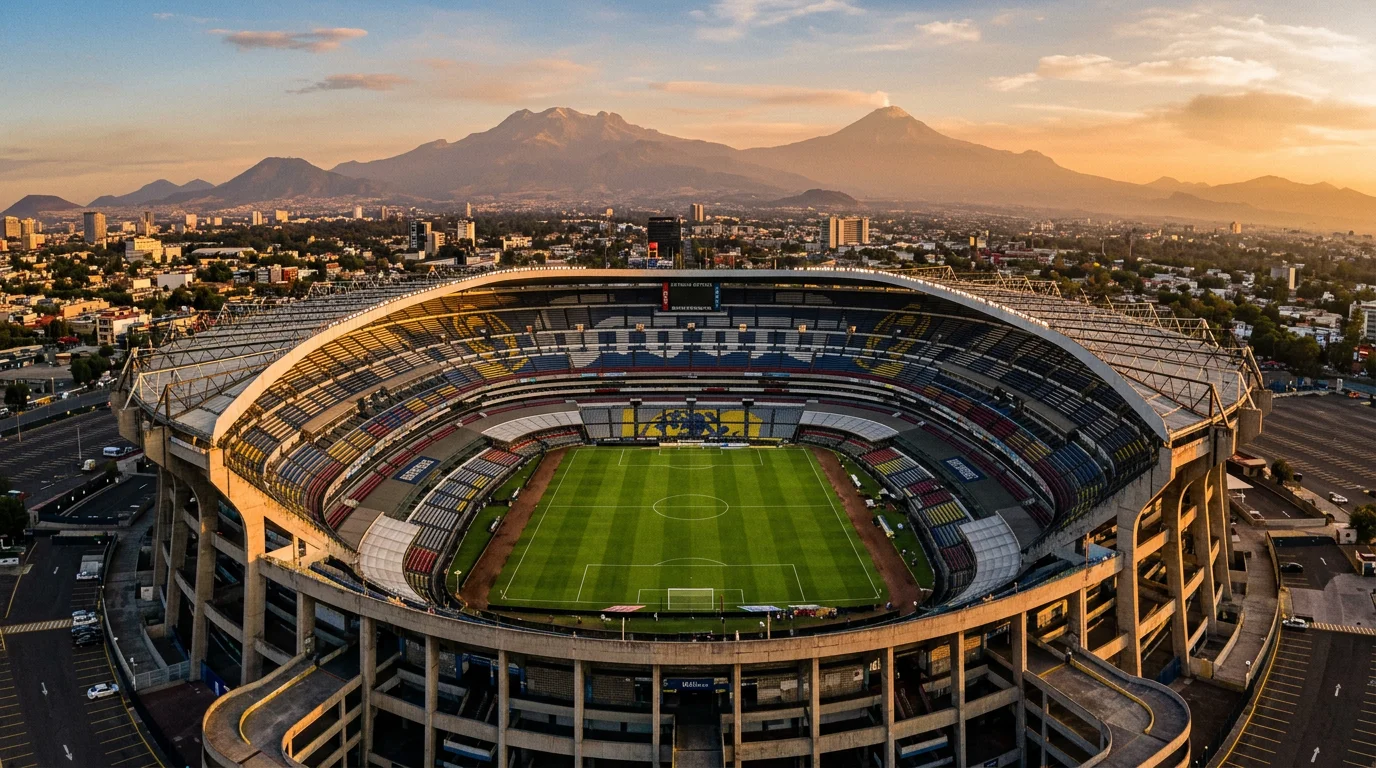
The first ball kicked at the 2026 World Cup will be struck inside Estadio Azteca on 11 June, and Group A supplies the fixture — Mexico against South Africa, a repeat of the 2010 tournament opener in Johannesburg. That symmetry alone would make this group worth examining. Add South Korea’s knockout pedigree, Czechia’s dramatic penalty shoot-out victory over Ireland in the play-offs, and you have four teams whose paths to the round of 32 are anything but settled. I have spent the past fortnight pulling apart Group A’s dynamics, and what stands out is a genuine four-way contest where no nation can feel safe after matchday one.
Czechia: Ireland’s Play-Off Conquerors Face a Different Test
I am starting with Czechia rather than the hosts because, for Irish readers, this is the team that ended the dream. On 26 March 2026 in Prague, Ireland led 2-0 before Czechia dragged themselves level at 2-2, then won 4-3 on penalties. If you watched that match in a pub in Dublin or Cork, you do not need me to recap the agony. What you do need is a clear-eyed assessment of whether that Czechia side can translate play-off grit into World Cup substance.
The short answer is: probably not to the extent of topping this group, but enough to qualify as one of the best third-placed sides. Czechia’s squad is built around a compact defensive block and rapid transitions. Patrik Schick remains the focal point in attack, though his fitness record at club level has been inconsistent. The midfield pivot of Tomás Soucek and Lukás Provod gives Czechia physicality and progressive passing in roughly equal measure. Defensively, Ladislav Krejcí has grown into one of the more reliable centre-backs in Serie A, and his reading of the game will be tested against South Korea’s movement and Mexico’s width.
The play-off win over Ireland showed Czechia’s resilience — they were dead and buried at 2-0 down — but it also exposed fragility under pressure. They conceded two goals in the first 35 minutes to an Irish side playing with freedom and intensity. In a World Cup group where Mexico and South Korea both press high, those early defensive lapses could prove fatal. Czechia’s best route through this group is pragmatism: take four points from South Korea and South Africa, then absorb what Mexico throw at them in the final match. From a betting perspective, Czechia to qualify at around 11/4 represents a reasonable proposition given that eight of the best third-placed sides advance from 12 groups. They do not need to finish second — they need to collect enough points to be among the best third-placed teams, and four points should be sufficient for that. Read about the team that qualified from this pool: Czechia World Cup 2026 analysis.
Group A at a Glance
Four teams, three matchdays, and a format that rewards even modest point tallies. With the top two from each group qualifying automatically and eight best third-placed sides also advancing, Group A is structured so that a single victory and a draw could be enough to see the knockout rounds. That changes the calculus for every nation involved.
Mexico enter as the highest-ranked side and carry the weight of host-nation expectation across the three Mexican venues. South Korea bring six consecutive World Cup appearances and a squad laced with European experience. South Africa return to the tournament for the first time since hosting in 2010, a 14-year absence that has sharpened their hunger. Czechia arrive as the lowest-seeded team but with the emotional momentum of that Prague play-off triumph fresh in their legs.
The group’s matches are split across Mexican venues: Estadio Azteca in Mexico City for the opener, Estadio Akron in Guadalajara, and Estadio BBVA in Monterrey. All three sit at significant altitude — Mexico City at 2,240 metres, Guadalajara at 1,566 metres, Monterrey at 540 metres — and acclimatisation will be a genuine factor for the European and Asian sides. Teams arriving from sea-level training camps will feel the thinner air in their lungs by the 60th minute, particularly in Mexico City. I factor altitude into every group prediction involving Mexican venues, and Group A is where it matters most because all six matches take place on Mexican soil.
Mexico: Home Soil, Opening Match
There is a photograph from the 1970 World Cup of the Azteca crowd — 107,000 people crammed into that concrete bowl — that captures something about Mexican football culture which statistics cannot. Fifty-six years later, Mexico open another World Cup in the same stadium, and the pressure to perform in front of their own supporters is immense. Mexico have not progressed beyond the round of 16 since 1986, a streak that has become a national obsession known as the “quinto partido” — the fifth match.
The current squad is a blend of MLS regulars, Liga MX veterans, and a handful of European-based players. Santiago Gimenez has established himself as a prolific striker in the Eredivisie, scoring consistently for Feyenoord, and his movement inside the box is the sharpest weapon Mexico possess. Edson Alvarez anchors the midfield with the defensive discipline he has honed at West Ham, while Cesar Montes and Johan Vasquez form a centre-back partnership that is more solid than spectacular. In goal, Guillermo Ochoa’s remarkable longevity means he could feature in his sixth World Cup — a record that speaks to both his quality and the lack of a clear successor.
Mexico’s tactical identity under Javier Aguirre — back for his third stint as national team manager — is pragmatic possession with quick switches of play to the flanks. They do not dominate games through pressing intensity the way South Korea do, nor do they sit deep and counter the way Czechia prefer. Instead, Mexico control tempo, use the crowd, and exploit the altitude advantage that visiting sides inevitably underestimate. In the opening match against South Africa, I expect Mexico to win by a single goal — the 1-0 or 2-1 variety that has characterised their home World Cup performances historically. Group winner odds sit around 4/6, which is short but justified given the venue advantage across all three matchdays.
South Korea: Asian Pedigree
When I began modelling Group A outcomes, South Korea kept showing up as the team most likely to cause problems for the predicted finishing order. Their squad depth has improved markedly since Qatar 2022, where they qualified for the knockout rounds by beating Portugal in the final group match — a result that demonstrated both tactical intelligence and big-game temperament.
Son Heung-min remains the talisman, though at 33 he is unlikely to carry the attacking burden alone for an entire tournament. The emergence of Lee Kang-in at Paris Saint-Germain has given South Korea a secondary creative outlet who can operate between the lines and unlock defences with through-balls that Son thrives on. In midfield, Hwang In-beom provides the engine work, covering ground and recycling possession with a consistency that allows the more creative players freedom to roam. Defensively, Kim Min-jae’s presence at centre-back — developed through seasons at Napoli and Bayern Munich — gives South Korea a genuine world-class defender, something few Asian sides have been able to boast at previous tournaments.
The altitude factor is real for South Korea. Their domestic league operates at sea level, and their European-based players train in conditions far removed from Mexico City’s 2,240 metres. Historically, Asian sides have struggled in Central American conditions — Japan’s 2014 World Cup in Brazil saw them wilt in the humidity of Recife, and while altitude is a different challenge to heat, the effect on endurance is comparable. South Korea will likely set up their pre-tournament training camp in a high-altitude location to mitigate this, but match fitness at altitude is difficult to replicate outside actual competition.
From a betting standpoint, South Korea to qualify from Group A is priced around 5/4, and I consider that fair rather than generous. They have the squad to beat Czechia and South Africa, but their record against CONCACAF sides in World Cups is mixed — one win, two draws, and two defeats across five previous meetings. The Mexico match on matchday two will define their group campaign.
South Africa: Return to the World Cup Stage
Fourteen years between World Cup appearances is a long time for any footballing nation, and South Africa’s absence since they hosted in 2010 has been marked by administrative turmoil, coaching instability, and a generation of talented players who never got the chance to perform on the biggest stage. That changes in June 2026, and the Bafana Bafana squad arriving in Mexico will carry the emotional weight of a continent’s expectations alongside their own.
South Africa qualified through the CAF pathway, finishing runners-up in their qualifying group before navigating the play-off round. Their strengths are collective rather than individual — this is not a side built around a single superstar but around a cohesive defensive structure and rapid counter-attacking football that has served them well against technically superior African rivals. Percy Tau, if fit, provides the creative spark from wide positions, while Ronwen Williams in goal has established himself as one of the best shot-stoppers in African football, earning the CAF Goalkeeper of the Year award in consecutive seasons.
The realistic objective for South Africa is to avoid finishing bottom of the group and to compete for one of the best third-place spots. In a 48-team format where eight third-placed sides advance, South Africa need to collect points rather than necessarily win their group. A draw against Mexico in the opener — which the altitude and the occasion could make possible — followed by a competitive showing against South Korea would set up a decisive final match against Czechia. South Africa to finish third in the group is priced around 7/4, and that looks about right given the quality gap between themselves and the top two seeds.
Fixtures and Schedule in IST
Every Group A match takes place in Mexico, which means kick-off times for Irish viewers fall in the late evening or early hours. The ET-to-IST conversion adds five hours during summer, so a match kicking off at 6pm ET starts at 11pm IST — manageable for a midweek evening but not ideal for early risers the following morning.
| Date | Match | Venue | Kick-Off (IST) |
|---|---|---|---|
| 11 June 2026 | Mexico vs South Africa | Estadio Azteca, Mexico City | TBC |
| 12 June 2026 | South Korea vs Czechia | Estadio BBVA, Monterrey | TBC |
| 16 June 2026 | Mexico vs South Korea | Estadio Akron, Guadalajara | TBC |
| 17 June 2026 | South Africa vs Czechia | Estadio BBVA, Monterrey | TBC |
| 21 June 2026 | Mexico vs Czechia | Estadio Azteca, Mexico City | TBC |
| 21 June 2026 | South Korea vs South Africa | Estadio Akron, Guadalajara | TBC |
Exact kick-off times will be confirmed by FIFA closer to the tournament, but based on the scheduling pattern for Mexican venues, expect the opening match to kick off around midnight IST. The final matchday features simultaneous kick-offs — a staple of World Cup group stages since the 1982 “Disgrace of Gijon” — which means Irish viewers watching both matches will need a second screen or a decisive choice between the two fixtures. The full World Cup 2026 schedule converted to Irish Standard Time covers every match across the tournament.
Group A Odds and Qualification Prediction
I have run this group through my model three times, adjusting for altitude, recent form, and squad depth, and each iteration produces a similar output: Mexico top the group in roughly 55% of simulations, South Korea finish second in around 40%, and the battle for third place between Czechia and South Africa is decided by fine margins — goal difference, disciplinary record, or a single moment of quality.
| Team | Predicted Finish | To Win Group | To Qualify |
|---|---|---|---|
| Mexico | 1st | 4/6 | 1/8 |
| South Korea | 2nd | 5/2 | 4/9 |
| Czechia | 3rd | 9/1 | 11/4 |
| South Africa | 4th | 14/1 | 7/2 |
My predicted finishing order is Mexico first with seven points, South Korea second with five, Czechia third with three, and South Africa fourth with one. The value in this group sits with South Korea to finish top at 5/2 — Mexico’s home advantage is real but overstated in the market given their recent form, and South Korea’s European spine gives them the quality to beat Mexico in Guadalajara if the altitude differential is reduced at that lower venue. I also see merit in Czechia to qualify at 11/4 if you are comfortable with the best-third-place pathway; four points and a decent goal difference should be enough to advance from a group where all four teams are competitive. See the full draw on our homepage.
The match bet I find most interesting is South Korea vs Czechia on matchday one. Both sides will be anxious, both prefer a cautious approach, and the under 2.5 goals market at around 4/5 reflects the likelihood of a tight, cagey opening fixture. First matches in World Cup groups have averaged 2.3 goals per game since 2010, and this matchup profiles as lower than that average given both teams’ defensive organisation. For Irish punters watching with one eye on Czechia’s result, the draw at 23/10 is the outcome that keeps every qualification scenario alive heading into matchday two.
Did Ireland play Czechia in the World Cup 2026 play-offs?
Ireland and Czechia met in the UEFA play-off semi-final on 26 March 2026 in Prague. Ireland led 2-0 but Czechia equalised to force penalties, winning 4-3 in the shoot-out to claim the final European spot in Group A.
Where are Group A matches played at the 2026 World Cup?
All six Group A fixtures take place in Mexico across three venues: Estadio Azteca in Mexico City, Estadio Akron in Guadalajara, and Estadio BBVA in Monterrey. Mexico City sits at 2,240 metres above sea level, making altitude a significant factor for visiting teams.
